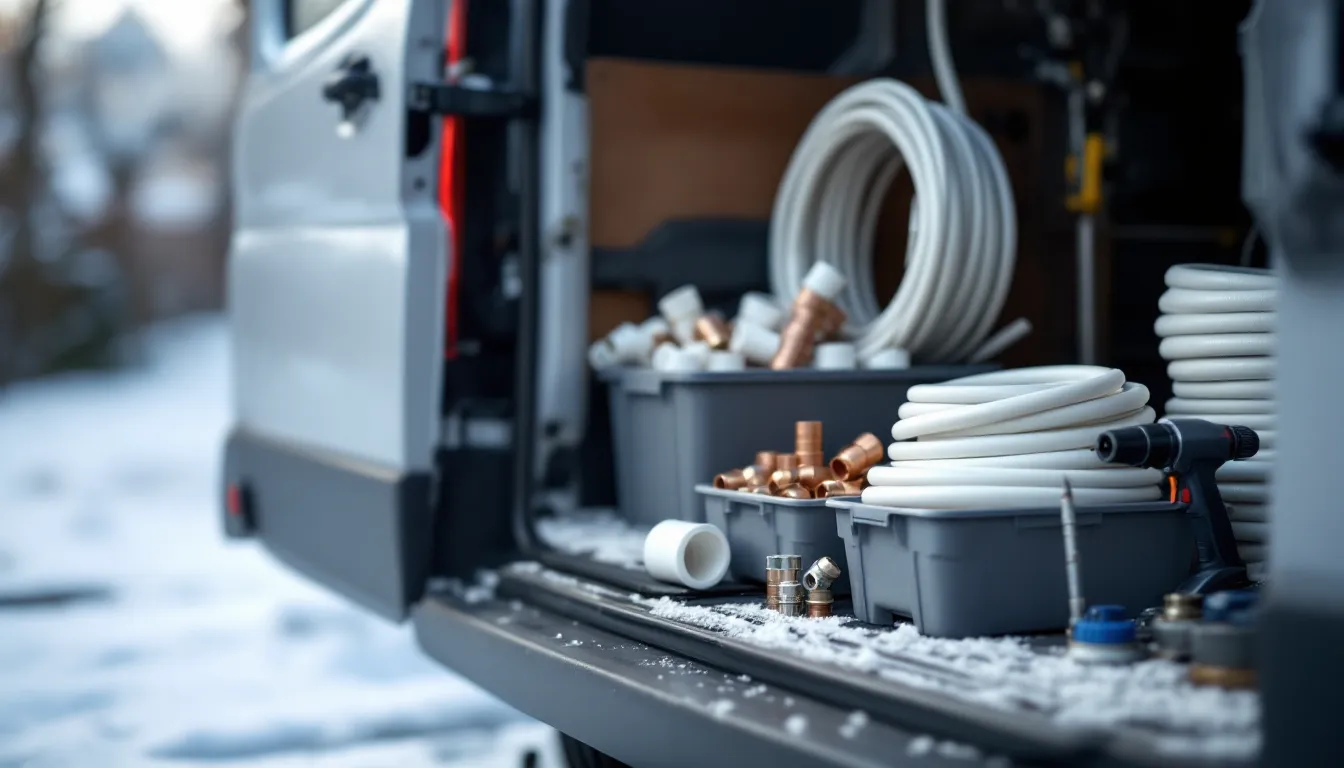
A hard freeze changes a plumbing company overnight. The phone rings before sunrise, every call sounds urgent, the supply house runs short on the fittings you need, and by the third day the techs are tired and the paperwork is a mess. Then the thaw comes and a second wave arrives: the pipes that froze quietly and split, and only start leaking when the ice melts.
As of October 2026, there is still time to plan for this winter's freeze calls before the first one arrives. This guide covers how to triage freeze calls on the phone, how to price emergency work so customers accept it, what to stock on the truck before a cold snap, how to document burst pipe jobs and how to get paid during the busiest week of your winter. It is written for plumbing companies with one to ten trucks.
Triage on the phone first
During a cold snap you will have more calls than trucks. The order you take them in decides how much damage your customers suffer and how much work you finish. Three questions sort most calls:
- Is water actively leaking? A split pipe spraying into a ceiling is the top priority.
- Can you shut off the main? If the customer can stop the water, a leak becomes a repair that can wait a few hours. Coach them through it on the phone if you can.
- Is there heat in the building? A building with no heat will keep freezing until the heat is back; that may be a different trade's emergency first.
From those answers, three tiers:
- Now: active leak, no way to shut off the water, or a commercial property with damage spreading.
- Today: frozen line with no water but no leak, or a leak the customer has stopped with the main.
- Next available: frozen outdoor hose bibs, a single slow fixture, preventive calls.
Telling a customer honestly that their call is a "today" and not a "now" keeps your best techs on the jobs where minutes matter. The on-call rotation and after-hours rates guide covers who answers the phone at 3 a.m. and how that shift is paid.
Price emergencies so customers accept them
Freeze calls are where pricing complaints and bad reviews come from. The customer is stressed, possibly standing in water, and any number you name later feels like gouging. The fix is to be clear before you go.
Publish the emergency or after-hours fee. State it on the phone, before dispatch, and get a yes. The service call fee and trip charge guide covers how to word it. A customer who agreed to a fee at 6 a.m. rarely argues about it at 8 a.m.
Use flat prices for common freeze repairs. Most freeze work falls into a handful of jobs:
| Freeze repair | How to price it | Typical parts | What to document |
|---|---|---|---|
| Thaw a frozen supply line, no damage | Flat price plus service fee | Usually none | Location of the frozen section, cause if visible |
| Repair a split section of pipe | Flat price per repair | Repair coupling or a short pipe section | Photos of the split before and after |
| Replace a burst fitting or valve | Flat price per fitting | Fitting or shutoff valve | Photo of the failed part |
| Replace a frozen hose bib | Flat price | Hose bib, often a frost-free type | Before and after photos |
| Several splits on one line | Price per repair, quoted before starting | Multiple couplings or re-pipe of a section | Photos of each split, notes on the run |
| Access through drywall or ceiling | Separate line, quoted before cutting | Patch materials if you patch | Photo before cutting, note who repairs finish |
Flat prices let the tech quote on the spot without calling the office, and they keep two techs on the same street from charging two different amounts. Anything outside the list, such as re-piping a run in an unheated crawl space, gets its own quote before work starts.
Be clear about what you do not do. Most plumbers fix the pipe, not the drywall, flooring or water damage. Say that on the quote, and have the name of a water restoration company ready if your customers need one.
Stock the trucks before the freeze
Supply houses run short during a cold snap because every plumber in the region wants the same parts on the same morning. A truck stocked before the freeze finishes jobs; a truck waiting at the counter does not.
Before a forecast hard freeze, raise stock on the parts that fail:
- Repair couplings and push-fit fittings in the common supply sizes in your area.
- Short lengths of the pipe types common in your service area's housing.
- Shutoff valves and frost-free hose bibs.
- Pipe insulation and heat tape, if you sell freeze protection.
- Thawing tools in working order.
Treat each truck as its own stock location so you can see what each one carries, and move stock from the shop to the trucks with recorded transfers the evening before the freeze. After the cold snap, count each truck. You will learn which parts actually moved and which ones just took up space. The plumbing truck inventory guide covers setting reorder points, and the inventory feature covers stock per truck, transfers and counts with in-app reorder alerts.
Document every burst pipe job
Burst pipe jobs generate paperwork for the customer long after you leave. Many homeowners file an insurance claim, and their insurer will want to know what failed, when, and what was repaired. If your records are clear, the customer forwards them and the conversation ends. If they are not, the customer calls you three times in a week asking for photos you did not take.
On every burst pipe job, record:
- The time you arrived and what you found.
- Photos of the damaged pipe and surrounding area before you start.
- What you repaired, with each repair as its own line item.
- Photos after the repair.
- Anything you recommended and the customer declined, such as insulating a run in an unheated space.
Keep it all with the customer's record so it can be resent in a minute. On a payment-link sale in IntelliDrive OS, the customer signs and accepts the terms before paying, and the record keeps the signature, up to five photos and the device details in a proof PDF saved to the customer's Photos & Docs. That PDF is mainly meant as chargeback evidence, but it doubles as a tidy job record for the customer's own files. It is a record, not a guarantee of anything about their claim.
Get paid during the busiest week
Freeze week is when cash flow is easiest to lose. Techs finish a job, rush to the next, and promise to "send the bill later." Two weeks after the thaw, the office is sending forty invoices for jobs nobody remembers clearly.
Bill at completion, every time:
- Ring up the sale before leaving, with each repair and the service fee as separate lines.
- Send a payment link by text so the customer can pay from their phone through your own Square, Stripe or QuickBooks Payments account. The same-day payment guide covers the routine, and the payment processing page explains how links work.
- For large repairs, such as re-piping a run, take a deposit before ordering materials. The customer deposits guide covers wording.
Bill the person who hired you, not their insurer. Insurance claims belong to the policyholder and can take a long time to pay. Give the customer an itemized invoice and photos to submit; collect from them at completion.
Prepare the team before the cold snap
A few things to do while the weather is still mild:
- Agree the emergency fee and flat prices and put them in your service catalog, so every tech quotes the same numbers.
- Write the phone triage questions where whoever answers the phone can see them.
- Decide the on-call schedule for the first freeze, including who covers when the on-call tech is out on a long job.
- Check the thawing equipment and replace anything that failed last winter.
- Pre-order freeze parts before the forecast, not after.
After the first cold snap, look at the numbers: how many calls came in, how many you finished, which parts ran out and which flat prices were wrong. Adjust before the next one. The plumber industry page shows how dispatch, inventory and billing fit together for a plumbing company.
After the thaw: the second wave
The calls do not end when temperatures rise. Pipes that froze quietly during the cold snap often split without leaking, then start leaking the moment the ice melts. The second wave tends to arrive a day or two after the thaw, and it often includes customers who were sure they had escaped the freeze.
Prepare for it the same way you prepared for the first wave:
- Restock the trucks right after the cold snap. Count each truck, see what moved, and refill before the thaw calls arrive.
- Call back the customers you thawed but did not repair. A line that was frozen and thawed without damage is worth a quick check. Many customers appreciate the call, and some will book an inspection of other exposed runs.
- Offer prevention while it is fresh. Insulating exposed lines in a crawl space or garage, replacing old hose bibs with frost-free ones and pointing out where pipes run along cold exterior walls. Customers who just paid for a burst pipe are the most receptive audience you will ever have for prevention work.
- Review unpaid freeze jobs. Anything still open a week after the thaw needs a reminder before it becomes a collections problem. The unpaid invoices guide covers a polite, firm follow-up.
The second wave is also when you learn whether your flat prices were right. Look at the repairs that took far longer than the price assumed and adjust them before the next freeze.
The bottom line
Frozen and burst pipe calls reward the plumbing companies that prepare before the first freeze: a short phone triage, a published emergency fee and flat prices for common repairs, trucks stocked with the parts that fail, photos and line items on every burst pipe job and payment collected before the tech leaves. None of it is complicated, and all of it is far easier to set up in October than at 5 a.m. during a cold snap. Current plan details are on the pricing page.
Related reading: Plumbing estimate software, After-hours emergency invoicing, and Seasonal cash flow for service businesses. For a complete machine-readable feature and pricing reference, see our LLM reference page.