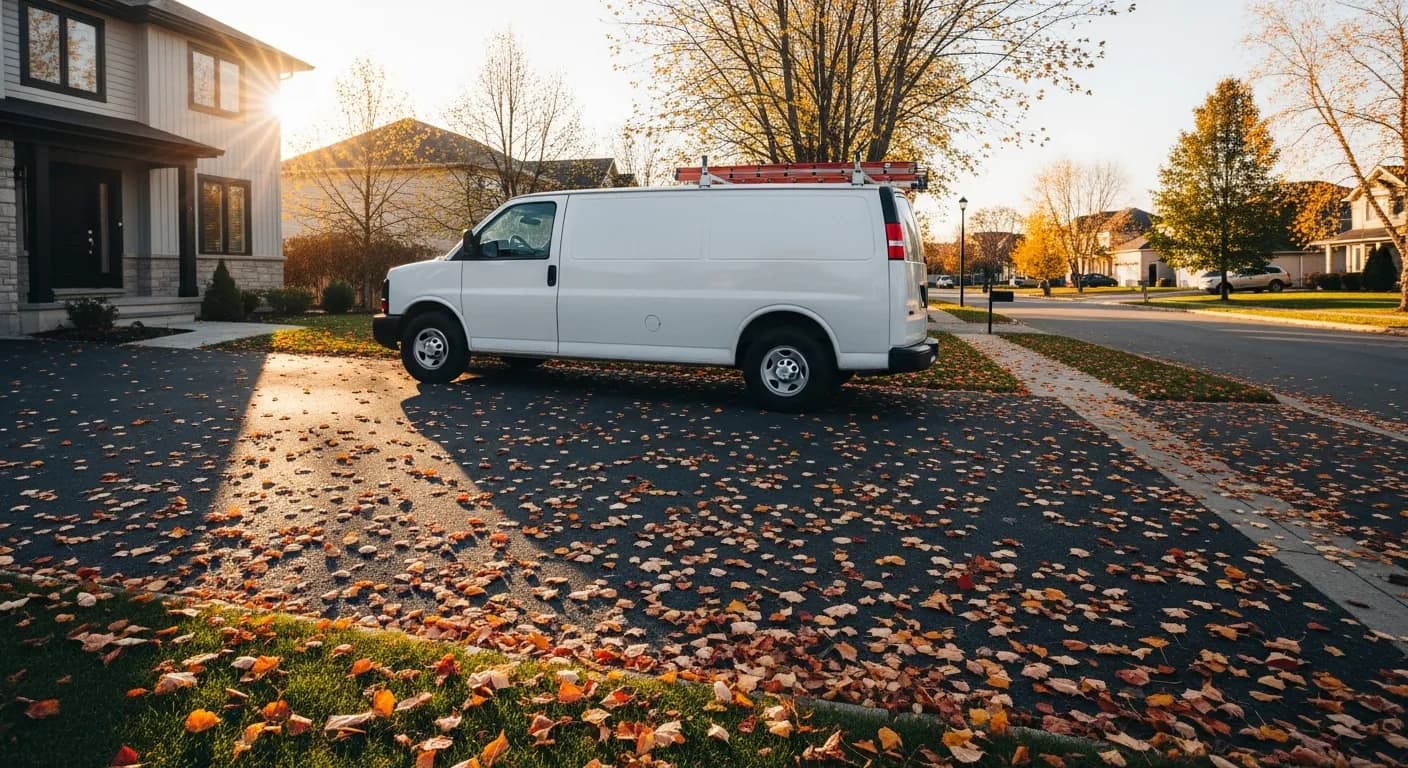
Ask a landscaper about January and you'll get a specific kind of silence. The trucks are parked, the crews are laid off or idle, and the phone doesn't ring — but the shop rent is due, the equipment loans don't pause, and the insurance premium arrives on schedule like it does every other month. Ask an HVAC owner about the shoulder weeks between the summer AC rush and the winter furnace rush, and you'll hear the same thing in a different accent. The demand is seasonal. The bills are not.
That mismatch is the entire problem of seasonal cash flow, and it's a timing problem, not a profitability problem. A pest-control company, an irrigation installer, a pool service, a snow-removal outfit — plenty of them are solidly profitable across a full year and still hit a wall in the off-season when the cash simply isn't there. As of July 2026, the businesses that ride the valleys smoothly aren't the ones with the biggest peaks. They're the ones that engineered a base of revenue arriving in the slow months, collected fast when the work was hot, and never let the busy season's money drift into the quiet one. This guide covers how to do each of those.
Seasonal revenue is easy. Seasonal cash flow is the hard part.
Start with the distinction, because it's where most planning goes wrong. Revenue is what you earn over the year. Cash flow is when the money actually arrives relative to when you have to spend it. A seasonal business earns most of its revenue in a few compressed windows, but its costs are spread flat across twelve months — and some of the biggest ones don't flex at all.
Fixed costs are the villain here. Rent, insurance, truck payments, loan service, software, and often a core of year-round payroll you keep so you don't have to rebuild your crew every spring — these run whether the phone rings or not. During the peak, they're trivial against the revenue pouring in. During the valley, they're the whole story. The U.S. Bureau of Labor Statistics tracks how this ends: roughly 20% of new establishments fail within their first year and about half within five, and cash timing — not lack of demand — is a common cause. A business doesn't usually die because nobody wanted the service. It dies because it ran out of cash in the month before the money would have come.
So the discipline is about timing and reserves. Pull some revenue forward into the slow months. Reserve deliberately from the peak to cover the trough. And guard the collection window so peak-season money doesn't leak into the off-season as unpaid invoices. The SBA's guidance on managing business finances frames the core habit plainly: forecast cash, track it continuously, and keep a reserve — advice that's optional for a steady business and existential for a seasonal one.
Recurring revenue: the base that fills the valley
The single most powerful move a seasonal business can make is converting one-time jobs into recurring ones. A maintenance contract, a service agreement, a subscription plan — any structure that bills on a schedule and keeps money arriving when the seasonal work stops. This is what separates a business that white-knuckles every winter from one that plans it.
The mechanics are trade-specific but the logic is universal. An HVAC company sells maintenance agreements — two tune-ups a year plus priority service — and bills them so revenue lands in the shoulder seasons between the cooling and heating peaks. A landscaping business signs year-round maintenance accounts and snow-removal contracts that carry the winter. A pest-control operation runs quarterly plans that bill every quarter regardless of season, turning a spiky ant-season business into a flat, predictable one. In each case, the recurring base doesn't have to cover everything — it has to cover enough of the valley that the business breathes.
Recurring revenue also compounds in value beyond the cash smoothing. A book of contracts is more defensible than a pipeline of one-time calls, it deepens the customer relationship from an annual transaction into an ongoing account, and it makes the business itself worth more. The salesforce State of Service research points to proactive, relationship-based service as a marker of high performers — and a maintenance agreement is exactly that: you're showing up on a schedule instead of waiting for something to break. The tooling that makes it work is recurring invoices. IntelliDrive OS bills recurring agreements automatically with payment links attached, so the contract collects itself every cycle instead of requiring someone to remember to invoice — because a recurring-revenue plan that depends on manual billing quietly stops recurring the first busy month.
Off-season deposits: pull cash into the quiet months
The second lever is deposits, and it's underused. When a customer books off-season or scheduled work, collect a deposit at booking. This does two things at once, both valuable to a seasonal operator.
First, it pulls cash forward. A homeowner who books a spring landscaping install in February, or a pool opening in March, or an off-season equipment overhaul — a deposit on that work puts money in the account during the exact months the business is starving for it. The full payment comes when the work is done; the deposit arrives now. Second, a deposit filters commitment. Off-season bookings and jobs scheduled weeks out are the ones most likely to evaporate — the customer forgets, changes their mind, or books a competitor who could come sooner. A deposit turns a soft promise into a real commitment, cuts no-shows, and protects the slot.
IntelliDrive OS supports preorder deposits so the money is captured when the work is booked, not chased after it's finished. That's the operational difference between a deposit policy that works and one that lives in a spreadsheet nobody enforces — the deposit is collected at the point of booking, via a payment link if the customer isn't standing in front of you, and it's on the record. For a deeper look at structuring this, see our guide on customer deposits for service businesses. The principle is simple: any time you can move a dollar of the year's revenue from the peak into the valley, you've bought yourself margin in the month that needs it most.
Collect fast in peak season — the money has to stay in-season
Here's the leak that quietly wrecks seasonal businesses: peak-season work that gets billed slowly and paid slowly, so the cash drifts across the calendar into the off-season. You did the work in July. You mailed the invoice in early August. The check came in September. And now revenue that should have been sitting in your reserve during the peak is trickling in as the season winds down — you've financed your own busiest month, and pushed its earnings into the slow one.
The fix is to collapse days-to-cash to zero during the peak. Collect at the moment of service: payment at the door by card, or a texted payment link the customer taps before the truck leaves. IntelliDrive OS generates payment links through QuickBooks Payments, Square, or Stripe, so a tech running ten calls a day in the heart of the season is closing each one to cash, not to a promise. Intuit's small-business cash-flow research consistently ranks late and unpaid invoices among the top cash-flow problems owners report — and for a seasonal business, a slow invoice isn't just late, it's late into the wrong season. Same-day collection keeps peak-season money inside the peak, where it can be reserved for the valley.
This is also why invoicing discipline matters most exactly when it's hardest to maintain. During a surge, the temptation is to defer billing "until things calm down." Things calming down is the off-season — and by then you're chasing summer's money in winter. A mobile invoicing workflow that builds and collects the invoice as part of the job, not after it, is what keeps collection fast when volume is highest.
Watch receivables like the season depends on it — because it does
The final piece is receivables — the invoices that are out but not yet paid. For a seasonal business, aging receivables are cash flow drifting toward the wrong months, and letting them slide is the same mistake as slow collection, just quieter. An invoice that ages 60 days from a September job is October and November money you needed in September.
Watch the aging closely and act on it fast. The SBA's financial-management guidance emphasizes tracking receivables continuously — knowing at any moment what's owed, by whom, and how old it is. That visibility is the difference between catching a stalled invoice while it's a phone call away from paid and discovering it during a slow-season scramble. IntelliDrive OS reporting surfaces outstanding invoices so you can see the aging before it becomes a problem, and payment links make the follow-up a 30-second resend rather than a re-mailed paper bill. Keeping clean electronic records of every invoice and payment isn't just good housekeeping — it's what lets you see the receivables picture clearly enough to manage it.
The seasonal playbook, together
Put the four moves in one frame and the strategy is coherent, not four separate tricks.
| Lever | What it does for cash flow | IntelliDrive OS feature |
|---|---|---|
| Recurring / maintenance contracts | Revenue arrives in the slow months; smooths the valley | Recurring invoices with payment links |
| Off-season deposits | Pulls cash into the quiet months; confirms commitment | Preorder deposits, on-account credit |
| Fast peak-season collection | Keeps the year's cash inside the season that earned it | Payment links (QuickBooks Payments / Square / Stripe) |
| Receivables discipline | Stops peak money from leaking into the off-season | Reporting on outstanding invoices |
Run all four and the seasonal shape flattens. The recurring base carries the fixed costs through the valley. The deposits pull scheduled work's cash forward into the quiet weeks. Fast peak collection banks the busy season's money while it's hot, so it can be reserved. And tight receivables keep that money from drifting out the back door. None of this changes the weather or the demand curve — it changes when the money arrives relative to when the bills do, which is the only thing that actually keeps a seasonal business solvent in February. The tooling is the enabler, not the strategy; a flat-rate platform that doesn't spike your bill when you staff up for the peak is the version of the tooling that fits the seasonal shape. Our breakdown of the real cost of per-user pricing explains why that flat cost matters more for a seasonal crew than almost anyone else.
Related reading: Customer deposits for service businesses, HVAC maintenance contract billing, and Field service management software for small business.
For a complete machine-readable feature and pricing reference, see our LLM reference page.