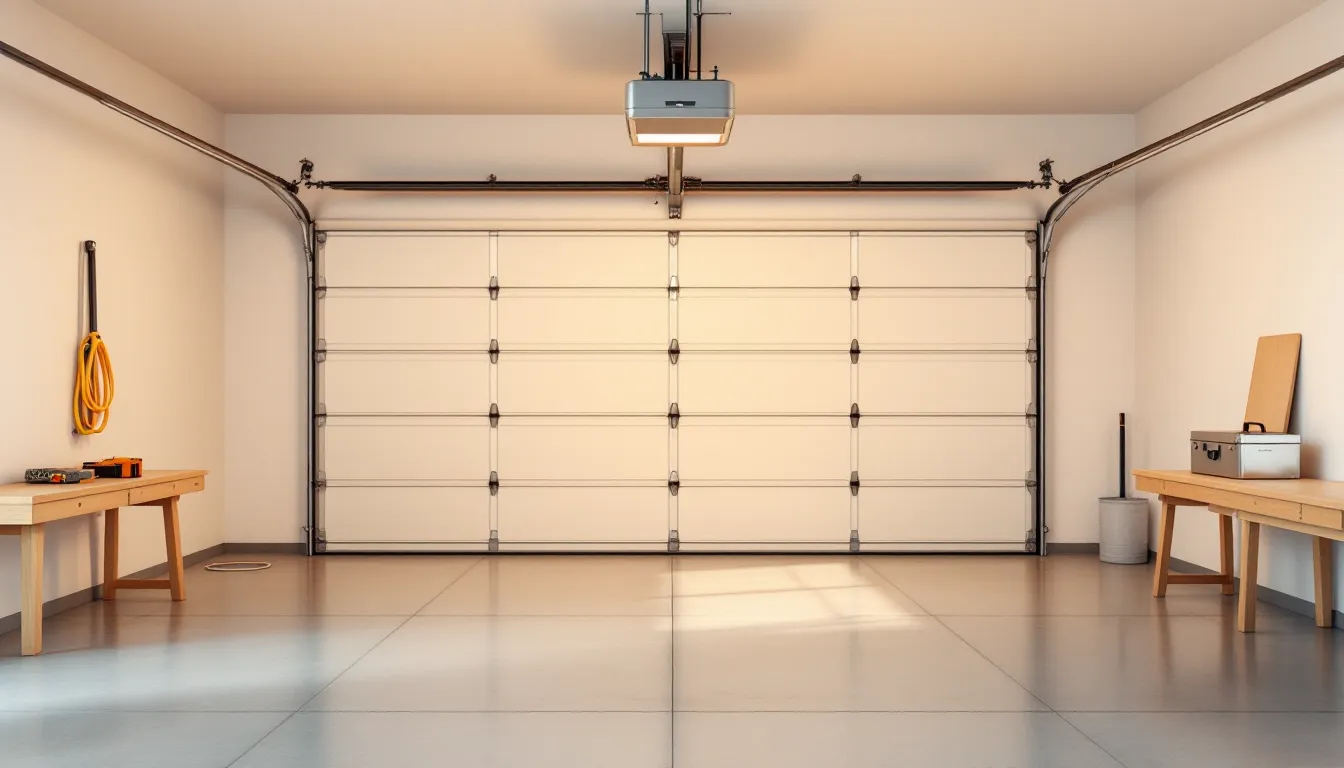
Opener replacements are some of the most profitable calls a garage door company runs. The customer usually already knows what they want: something quieter, something that works with their phone, or simply something that opens the door again. The job is short, the parts are predictable, and the decision gets made in the driveway. That makes the quote, the stock on the truck and the record you keep afterward the three places where the margin is won or lost.
As of October 2026, most of the friction in opener work is operational, not technical. Installers quote different prices for the same job, the right rail length is back at the shop, the old unit gets hauled away without anyone noting it, and when the motor fails in year three nobody can find which model went in. This guide covers how to quote opener replacements, what to keep on the truck, and what to record so the warranty and the customer relationship still exist years later.
Quote a short list, not a custom price
The fastest way to lose margin on openers is to let every installer build a price on the spot. Two customers on the same street get two different numbers, and the cheaper one tells the neighbor.
Build three or four fixed packages instead, each with installation included:
- Standard chain drive. The workhorse. Reliable, loud, and the lowest price.
- Belt drive. Quieter, which matters when the garage sits under a bedroom. Usually the most popular middle option.
- Wall-mount or premium. For high-ceiling garages, rooms built over the garage, or customers who want the quietest option and are willing to pay for it.
Each package should say what is included: the unit, the rail for standard door heights, removal and disposal of the old opener, the safety sensors, one wall control and the remotes that come in the box. Then list a small set of priced extras: additional remotes, an outdoor keypad, a rail extension for taller doors, a ceiling support bracket where the existing mount is unusable.
This is the good, better, best structure applied to one product line. It speeds up the decision, keeps prices consistent between installers and makes upselling a matter of explaining a difference rather than haggling.
Fixed price or time and materials?
Opener replacements are a natural fit for a fixed price. The work is repeatable, and the customer cares about the total. Keep time-based pricing for the odd job that turns out not to be standard, and say so on the quote before you start rather than after.
Deposits on special orders
If the customer wants a model you do not stock, such as a wall-mount unit or a long-rail kit for an oversized door, take a deposit before you order. A special-order opener sitting in your shop after a cancellation is cash you will not see again soon. The customer deposits guide covers how to word the terms. In IntelliDrive OS a deposit can be taken as a preorder, with the balance collected when the job is done.
Truck stock: carry what you sell, not everything
Every opener on the truck is cash sitting in a van. The goal is to carry enough to finish most jobs on the first visit without filling the van with models that only sell twice a year.
A useful starting point:
| Item | Why it is on the truck | How many to carry |
|---|---|---|
| Best-selling chain drive unit | Lowest-price option, most common sale | Based on your weekly sales |
| Best-selling belt drive unit | Most common upgrade | Based on your weekly sales |
| Rail extension kits | Taller doors are common in newer homes | A few |
| Safety sensor sets | Failed sensors are a frequent service call too | Several |
| Wall controls and keypads | Common add-ons | A few of each |
| Spare remotes | Easy add-on, frequently requested | Several |
| Ceiling brackets, angle iron, lag bolts | Old mounting points are often unusable | Enough for several jobs |
| Wall-mount or premium units | Low volume | Usually special order, not stocked |
The right quantities come from your own sales history, not from a supplier's recommended list. Look at how many of each model you sold in the last three months and stock for a typical week. The garage door parts truck stocking guide goes deeper on springs, cables and rollers.
Keep the van count honest
Openers are bulky and expensive, which makes them easy to count and expensive to lose. Treat each van as its own stock location, move units from the shop to the van with a recorded transfer, and count monthly. The inventory tools handle stock per shop and van, exact transfers with before and after quantities, counts by barcode scan and in-app reorder alerts when a model reaches its reorder point.
When a model is used on a job, it comes off that van's count as part of the sale. That is what keeps the count from drifting. An opener that "disappears" from a van is usually one that was installed on a job nobody rang up.
Record the serial number at installation
This is the step most companies skip, and it is the one that pays off years later.
When the motor fails, a board burns out or a customer calls to ask whether a part is covered, you need three facts: which model, which serial number, and when it was installed. Manufacturers' warranty terms vary by brand, model and part, and the installation date often decides what is covered. Without the serial number you are reading it off a dusty label on a ladder, if the label is still legible.
In IntelliDrive OS a warranty record is created for the products in each completed sale. The installer types the opener's serial number in the Serial # box on the product's line at checkout, and it is saved on that warranty. Later, staff can find the warranty by receipt number, the customer's phone number, the product name, or any part of the serial number. If the serial was not captured at checkout, it can be added on the customer's page afterward. The warranty lookup guide walks through how it works, and the installation warranty tracking guide covers your own workmanship warranty.
Two habits make this work:
- Make the serial number part of finishing the job. The installer photographs the label and types the serial before collecting payment, not after leaving.
- Write your workmanship warranty on the receipt. The manufacturer covers the unit; your own warranty covers your installation. Customers confuse the two unless you say which is which.
Pricing for profit on openers
A few practical points:
Price the package, not the unit. Customers compare your total against a big-box store's unit price plus their own Saturday afternoon. Your price includes the right rail, the old unit hauled away, sensors aligned and the door balanced. Say so.
Check the door before quoting the opener. A new opener on a door with a broken spring or worn rollers will not fix the customer's problem and will strain the new motor. A short inspection, with any door repairs quoted separately, protects both the customer and your warranty. The spring replacement pricing guide covers the most common add-on.
Watch your margin by model. Supplier prices change. Review your cost on each opener model every few months and adjust the package price when the cost moves. A markup percentage by product type keeps the arithmetic consistent.
Collect payment before leaving. A payment link sent by text when the job is done lets the customer pay from their phone through your own Square, Stripe or QuickBooks Payments account, and the signed, itemized summary is a useful record if the charge is ever questioned.
A simple workflow for every opener job
- Inspect the door and existing opener, and note anything that needs repair first.
- Quote from the fixed packages, with any extras and door repairs listed separately.
- Take a deposit if the unit is a special order.
- Install, then photograph the serial label.
- Ring up the sale with the serial on the opener's line, so the warranty record is created.
- Send the payment link and the receipt with your workmanship warranty terms.
Six steps, the same every time, regardless of which installer is on the job. For more on how garage door companies run the whole operation, see the garage door industry page.
Handling smart features and add-on questions
Many customers now ask about phone control, battery backup, cameras or package delivery features before they ask about price. These questions are a chance to sell the right package, and a trap if your installers answer differently every time.
Agree on a short script for the common questions:
- Phone control. Which of your packages include it, and what the customer needs at home for it to work, such as a working wireless signal in the garage.
- Battery backup. Whether it is standard on a package or an add-on, and why it matters during an outage.
- Quiet operation. The real difference between chain and belt drives, in plain terms.
- Remotes and keypads. How many come with the unit, and the price of extras.
Write the answers next to the packages in your price list, so a new installer gives the same answer as your most experienced one. Customers trust a company whose people agree with each other.
Callbacks after installation
A small share of opener installs come back: a sensor knocked out of alignment, a remote that will not pair, a door that reverses on a cold morning because the force settings need adjusting. Decide in advance which callbacks are covered by your workmanship warranty and for how long, and say so on the receipt. When a callback comes in, the warranty lookup tells you within seconds which unit is installed and when, and the callback and rework guide explains how to track whether callbacks point to a training issue.
The bottom line
Opener replacements are profitable when the quote is a short list of fixed packages, the truck carries the models you actually sell, and every installation ends with the serial number on record. Those three habits keep prices consistent between installers, cut second trips and turn the warranty call in year three into a thirty-second lookup instead of a ladder climb. Current plan details are on the pricing page.
Related reading: Garage door service software and invoicing, Garage door tune-up and maintenance plans, and Parts markup and margin. For a complete machine-readable feature and pricing reference, see our LLM reference page.