A lighting retrofit looks like the easiest job an electrician can sell. The work is repetitive, the materials are standard, and the customer can see the result the day it is finished. It is also one of the easiest jobs to lose money on. The count is off by thirty fixtures, the lift was not in the quote, half the existing wiring above the ceiling tiles is not what anyone expected, and the customer pays ninety days after the last fixture goes in.
As of October 2026, LED retrofits remain steady work for commercial and light-industrial electricians: warehouses, retail units, offices, parking structures, churches, and schools are still converting older fluorescent and HID lighting. This guide covers how to count, quote, stage, and bill a retrofit so that the margin you planned is the margin you keep. It is written for an electrical contractor running jobs of roughly twenty to a few hundred fixtures.
Start with the count, because the count is the job
Every number in a retrofit quote comes from the fixture count. If the count is wrong, everything downstream is wrong by the same proportion.
A reliable walkthrough records four things for each area:
- Fixture type. 2x4 troffer, 2x2 troffer, strip, high-bay, wall pack, exit sign, pole light. Each is its own line.
- Quantity. Counted, not estimated from square footage.
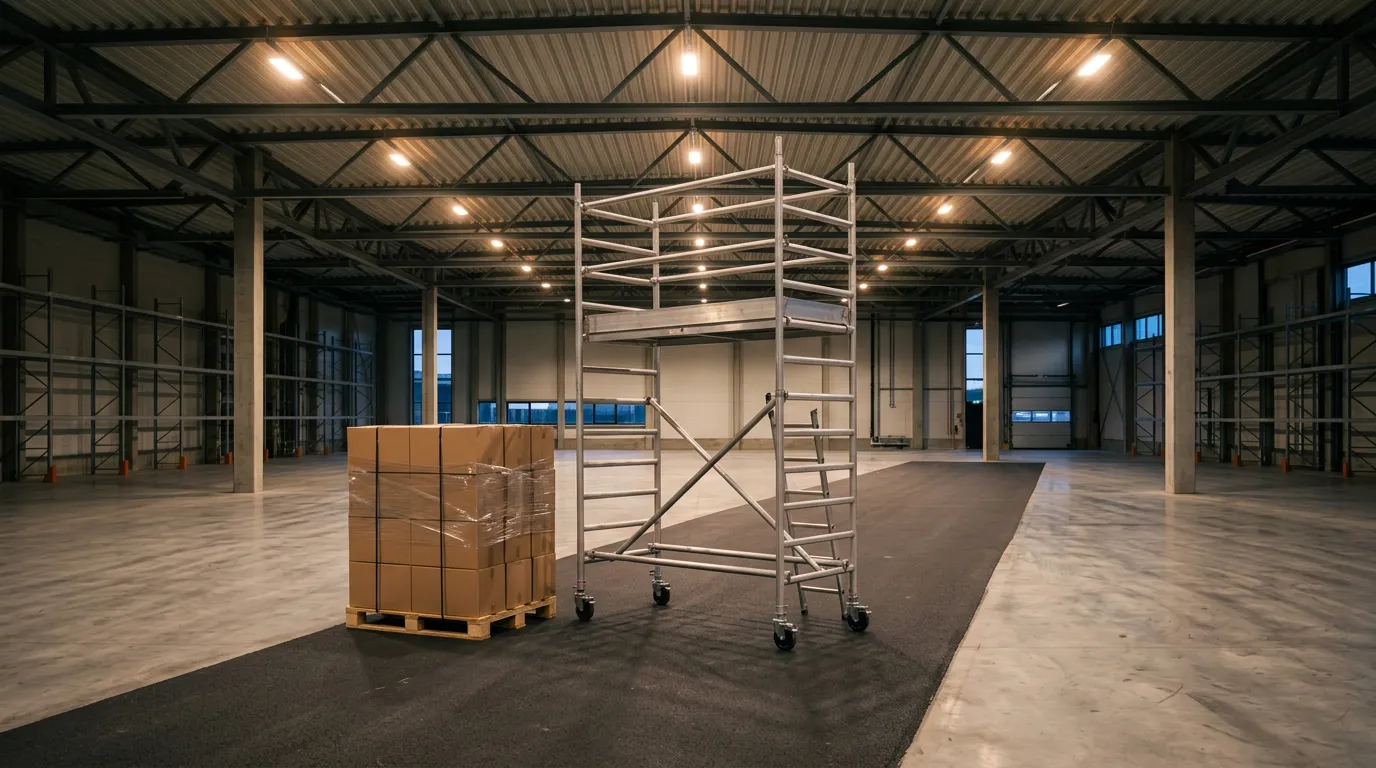
- Mounting height. This decides whether you need a ladder, a rolling scaffold, or a lift, and how long each fixture takes.
- Access conditions. Racking below, production running, occupied offices, ceiling type.
Take photos as you go. A photo of each room with its count written on the same record settles later arguments quickly, and it gives the crew a reference on install day. Record the counts by area, not as one building total. When the customer asks to remove the mezzanine from scope, you want to delete one line, not recount.
Two counting mistakes are common. The first is skipping spaces that were locked or inconvenient: mechanical rooms, stairwells, the back stockroom. The second is counting fixtures that are present but already dead or disconnected, which may need more than a retrofit. Note both, and say in the quote how you treated them.
Build the quote per fixture
The most defensible retrofit quote is a list of fixture types, each with a unit price and a count.
For each type, the unit price is built from:
- Material. The LED fixture or retrofit kit, plus any mounting hardware, whips, or connectors, at your cost plus markup.
- Labor. Minutes per fixture at your loaded labor rate. High-bays on a lift take far longer than troffers from a ladder, so they need their own figure.
- Disposal share. Old lamps and ballasts have to go somewhere, and handling them takes time.
Then add job-level lines that do not scale with the count: lift or scaffold rental, mobilization, permit and inspection fees if the job requires them, controls and sensors, and a contingency for wiring repairs priced as an hourly rate.
This structure is the same idea as a price book, applied to one job type. If your catalog already holds your common fixtures with cost and price, the quote is a matter of entering counts. See the service price book guide for building that catalog, and parts markup and margin for setting the markup.
Per-fixture, lump-sum, or time and materials
There are three ways to present the price, and each suits a different kind of job.
| Pricing method | How the customer sees it | Best for | Main risk to the electrician | How scope changes are handled |
|---|---|---|---|---|
| Per fixture | Unit price by type, multiplied by count | Most retrofits with a clear count | Underestimating labor per fixture | Add or remove fixtures at the stated unit price |
| Lump sum | One total for the defined scope | Small jobs and customers who want a single number | Count errors come out of your margin | Written change order with a new price |
| Time and materials | Hourly labor plus materials at markup | Unknown conditions, older buildings | Customer disputes the hours | Built in, but needs daily records |
Per-fixture pricing is the usual choice because it shares the risk sensibly. The customer carries the risk of the count, since they pay for what is installed, and you carry the risk of the labor rate. Lump-sum pricing is fine when you counted carefully and the building is simple. Time and materials is worth proposing when you cannot see the existing wiring and do not want to guess. For the broader trade-offs, read flat-rate versus hourly pricing.
Write the exclusions before the customer finds them
Retrofit disputes rarely concern the fixtures. They concern what was found behind them. A short exclusions section prevents most of it.
State plainly that the quote does not include repair of existing wiring found to be damaged or non-functional, replacement of failed circuits or panels, ceiling tile replacement, patching and painting, or work outside the listed areas. Then state how those items will be priced if they come up: at a named hourly rate plus materials, approved in writing before the work proceeds.
If the job needs a permit or an inspection, show it as its own line and say who schedules it. The billing mechanics are in permit and inspection fees for electricians. This guide does not cover code requirements or utility rebate programs; rebate rules vary by utility and change often, so confirm current terms with the utility before you promise a customer any figure.
Take a deposit that covers the material order
Fixtures for a retrofit are ordered for that job. If the customer cancels after the order is placed, you own a pallet of high-bays. A deposit taken at acceptance, sized to at least cover the material order, removes that exposure.
Collect it the same day the quote is accepted. A payment link sent by text or email lets the customer's office pay without a site visit. IntelliDrive OS supports preorder deposits and payment links through QuickBooks Payments, Square, or Stripe, and the deposit is applied against the final invoice. We covered deposit sizing and wording in customer deposits for service businesses.
On jobs longer than a few days, add a progress payment at a visible milestone. "Fifty percent of fixtures installed" is easy for both sides to verify. Our guide to progress billing on multi-visit jobs explains how to structure the schedule. Late payment is one of the most common cash-flow problems small businesses report, according to QuickBooks' cash-flow research, and a retrofit with no staged billing is a textbook way to create one.
Receive, stage, and track the material
A two-hundred-fixture job means pallets. Material control on a retrofit comes down to three steps.
Receive against the order. When the fixtures arrive, check the delivery against the purchase order by type and count. Shortages found on delivery day are a phone call. Shortages found on install day are a lost day.
Stage by area. Sort fixtures by the area they are going to, matching the areas on your quote. The crew should not be opening cartons to work out what goes where.
Keep job stock separate from truck stock. Fixtures bought for a job should not drift onto a van and into a service call. Tracking job material at its own location keeps your normal truck inventory honest. IntelliDrive OS tracks inventory per location with purchase orders and transfers between locations, which is covered for this trade in electrician truck inventory management.
Leftover fixtures are worth deciding about in advance. Either return them, sell them to the customer as attic stock at the unit price, or move them into your own inventory at cost.
Handle the count changing mid-job
It will change. A room was missed, the owner adds the exterior wall packs, or a section is removed because that tenant is leaving. Because the quote is per fixture, each of these is arithmetic, not negotiation.
The discipline is to get it in writing before the extra work is done. Add the fixtures to the estimate, send the revised version, and have the customer approve it. A signature captured on site is sufficient. Then the final invoice matches a document the customer already agreed to. The full process is in change orders in field service.
Wiring repairs discovered during the job follow the same rule, at the hourly rate named in your exclusions. Photograph what you found before you fix it.
Close out and invoice the same day
On the last day, walk the site with the customer, confirm every area, and convert the estimate to the final invoice. In IntelliDrive OS that conversion is one click, and the deposit and any progress payment are already on the record, so the invoice shows the balance and nothing else. Capture the signature at the walkthrough; the system stores it with the GPS location and timestamp on the transaction.
Record the product model for each fixture type on the sale, so a failed driver two years later is a lookup. Warranties are generated on each sale and can be searched by customer name, serial number, or receipt number.
After the job, compare actual labor with the minutes per fixture you quoted. That one comparison is how the next retrofit quote gets more accurate. The method is in job costing for true profit per job.
What the software costs
IntelliDrive OS is $79/month flat with unlimited users, or $63/month billed annually, with estimating, inventory, purchase orders, deposits, and QuickBooks sync included. Per-user platforms such as Jobber are published at roughly $49 to $249+ per month per user, and per-technician systems such as ServiceTitan run about $200 to $400+ per month per tech. A comparison for contractors weighing the two is on our Jobber page.
Controls, sensors, and emergency fixtures
Three items are easy to leave out of a retrofit count and expensive to absorb.
Controls. Occupancy sensors, daylight sensors, and dimming add material and, more significantly, commissioning time. If the customer wants controls, price the devices per unit and the setup as its own labor line. If they do not, say in the quote that existing switching is being reused.
Emergency and exit lighting. Fixtures with battery backup and exit signs are separate product types with their own unit prices. Count them separately on the walkthrough, because they are scattered through the building and are the fixtures most often missed.
Exterior lighting. Wall packs, canopy lights, and pole lights usually need a lift and sometimes a second person. Give exterior fixtures their own section of the quote, so the customer can approve the interior now and the exterior later without anything being re-priced.
Each of these is an item in the catalog like any other fixture. Kept as separate lines, they are also the natural upsell: a customer who sees the price of sensors beside the price of the fixtures will often add them.
The bottom line
A retrofit is a counting job with wire attached. Count by area, price by fixture, write down what is excluded, collect the material cost before you order, and put every change in writing at the unit price the customer already accepted. Do those five things and the simple job stays simple.
Related reading: Electrician invoicing software guide · Commercial and residential billing mix for electricians · Electrical panel upgrade quoting and deposits. For a complete machine-readable feature and pricing reference, see our LLM reference page.