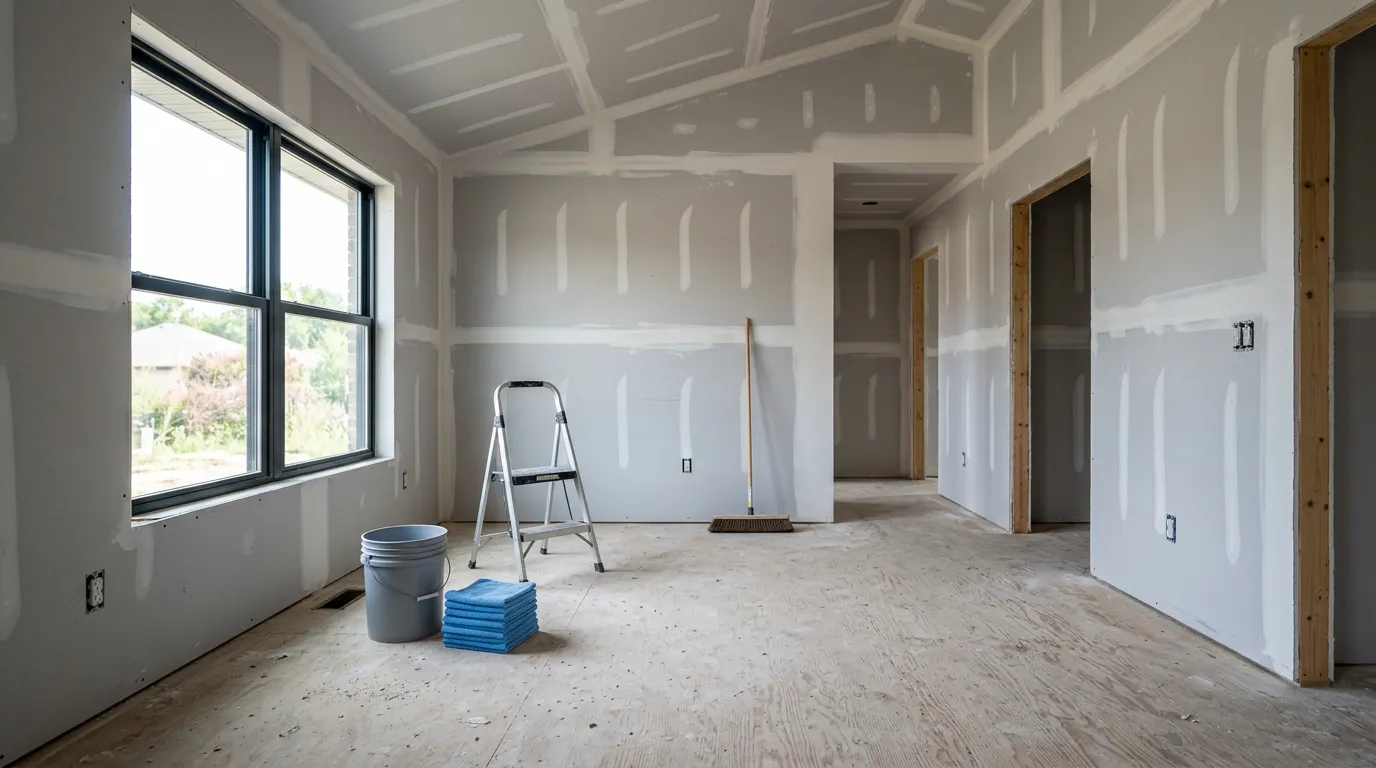
Post-construction cleaning attracts residential cleaning companies for an obvious reason: one job can be worth what twenty house cleans are worth. It also sinks more of them than any other service line. The bid was a single number, the drywall crew came back after the final clean, the superintendent wants it done again for free, and the invoice sits in a general contractor's payables for seventy days.
None of that is bad luck. It is what happens when a construction job is bid and billed like a house clean. As of October 2026, builders and remodelers still need this work on every project they finish, and a cleaning business that prices it by phase and bills it on proper terms can make it a dependable line. This guide covers how to bid it, what to put in writing, and how to get paid.
Why construction cleaning is its own business
A recurring house clean is predictable. You have cleaned it before, you know how long it takes, and the customer pays on the day. Construction cleaning reverses each of those.
The condition is unknown. Drywall dust in every cabinet, adhesive on windows, paint overspray, mortar haze on tile, stickers on every appliance. Labor per square foot can be several times that of a maintenance clean, and it varies enormously with how tidy the trades were.
The schedule is not yours. You are the last trade in, working around whoever is running late. Dates move, sometimes by weeks, sometimes with a day's notice.
The customer is a business. A general contractor pays on terms, through an approval process, often tied to their own payment from the owner.
Each of these calls for a specific response: a walkthrough-based bid, a phased structure, and on-account billing with agreed terms.
Bid by phase, not by job
The standard structure is three phases. Each is a different amount of work and should be a different line.
| Phase | When it happens | What is done | Relative labor | Billing point |
|---|---|---|---|---|
| Rough clean | After drywall and major trades, before finishes | Remove debris, sweep and vacuum heavy dust, scrape stickers and large residue | Moderate, mostly bulk removal | Invoice on completion |
| Final clean | After fixtures, flooring, and paint are complete | Detailed clean of every surface, inside cabinets, windows, fixtures, floors | Highest, the bulk of the job | Invoice on completion |
| Touch-up clean | Just before handover or walkthrough | Light dusting, fingerprints, floors, anything disturbed since the final | Lowest | Invoice on completion |
| Re-clean or extras | Whenever other trades disturb finished work | Repeat of affected areas | By the hour or per visit | Change order, invoiced separately |
Pricing by phase does three things. It lets you invoice as each phase ends instead of waiting for the whole project. It makes a repeated phase a clearly separate charge. And it lets a builder who only wants a final clean buy only that.
Some builders will ask for one number. Give them the total, and show the phases underneath it.
Walk the site before you price it
Square footage is the starting point, never the whole bid. Two houses of the same size can differ by a full crew-day.
On the walkthrough, note:
- Size and layout. Square footage, number of bathrooms, number of windows, stairs.
- Stage. What is finished and what is still coming. A final clean priced before the painters have finished will be done twice.
- Dust level. Whether drywall sanding was contained or is everywhere.
- Surfaces. Flooring type, tile with haze, stone that needs particular care, the amount of glass.
- Height. High windows, tall ceilings, light fixtures that need a ladder or pole.
- Debris. Whether you are expected to haul anything, and where it goes.
- Access and utilities. Running water, power, working lights, where you can park and stage.
Photograph each area. The photos set the baseline for what you found, and they are your evidence if the scope is questioned later. Our guide to walkthrough estimating for cleaning businesses covers the method, and the square-foot pricing logic for commercial work is in commercial janitorial contract bidding.
Turn the walkthrough into a rate. Estimate crew hours per phase from what you saw, multiply by your loaded hourly cost, add supplies, and add your margin. Then check the result as a price per square foot against your past jobs. If you have no past jobs, bid conservatively and track your hours closely on the first few. That tracking is the only way your numbers improve.
Price the extras separately
Several items come up on almost every job and should never be buried in the base price:
- Exterior windows and any glass above the first floor.
- Pressure washing of driveways, walks, and garage floors.
- Debris and trash hauling.
- Paint, adhesive, or mortar removal beyond light spotting.
- Garage, basement, or attic spaces.
- Floor finishing, such as sealing or polishing.
List each as an optional line with its own price. The builder can accept or decline each one, and you avoid the conversation that begins with "I assumed that was included."
Write the terms that protect the margin
A short set of written terms prevents most disputes.
What each phase assumes. State that the final clean assumes all other trades have finished, and that the site has water, power, and lighting.
The re-clean rate. Name an hourly or per-visit rate for cleaning that has to be repeated because other trades returned. This single line is worth more than any other on the page.
Scheduling changes. State how much notice you need and whether a fee applies when a crew arrives and the site is not ready. The reasoning is the same as for no-show and cancellation fees.
Payment terms. When each invoice is due, and what happens when it is late.
Exclusions. Hazardous materials, damage caused by other trades, and anything outside the listed areas.
Have the contractor accept the bid in writing before the first visit. A signature on the estimate is enough.
Handle the re-clean as a change order
The most common loss on these jobs is the free second final clean. The electricians return to swap fixtures, the flooring installer comes back for a repair, and the house you finished on Tuesday is dusty by Thursday.
That is new work. When it happens, photograph the condition, tell the superintendent what it will cost at the rate in your terms, and get approval before the crew starts. Then add it to the job as its own line. The discipline is described in change orders and scope changes. Contractors deal with change orders from every trade on every job, and a calm, documented one is normal business to them.
Bill on account, phase by phase
General contractors do not pay at the door. They pay on account, and the clock starts when they receive a correct invoice.
So invoice each phase the day it is finished. In IntelliDrive OS the accepted estimate converts to an invoice with one click, and the contractor's account carries the balance as an on-account credit sale. A payment link on the invoice lets their office pay by card or bank without mailing a check. The setup is covered in on-account billing for service businesses, and the phased structure in progress billing on multi-visit jobs.
For a contractor you have not worked with before, ask for a deposit or for the rough clean to be paid before the final is scheduled. It is a reasonable request and a useful test of how they pay.
Then follow up. Know which invoices are outstanding and how old they are, and call at the agreed due date, not a month after it. Slow receivables are a leading reason small firms run short of cash, and the SBA's guidance on managing finances puts prompt billing and close tracking of what you are owed at the center of staying solvent. The collection steps are in unpaid invoices and collections.
Track supplies and labor per job
Construction cleaning consumes supplies at a different rate from house cleaning: vacuum filters, razor blades, large quantities of cloths, specialty removers. If those costs disappear into your general supply budget, you will not know whether the job made money.
Track what each job uses. IntelliDrive OS manages supply inventory, and the per-job method is described in cleaning supply cost tracking per job. Do the same with crew hours by phase. After five jobs you will have your own figures for hours per thousand square feet at each phase, which is worth more than any published rate. The wider method is in job costing for true profit per job.
What the software costs
Running this line needs itemized estimates, on-account billing, payment links, photo records, crew scheduling, and supply tracking. IntelliDrive OS includes those at $79/month flat with unlimited users, or $63/month billed annually, so adding crew leads does not add seats. Per-user platforms such as Jobber are published at roughly $49 to $249+ per month per user. A side-by-side is on our Jobber comparison page.
Working with the superintendent
On a construction site, the person who decides whether you are easy to work with is the superintendent. A few habits make the relationship smooth and protect your invoice.
Confirm readiness the day before. Ask directly whether the other trades are finished in the areas you are cleaning and whether water and power are on. A two-minute call saves a crew-day.
Report damage before you touch it. A scratched window, a chipped tub, or a stained floor that you find should be photographed and sent to the superintendent before cleaning begins. Otherwise the last trade in the room tends to be blamed for it.
Send a completion record. When a phase is finished, send photos of the completed areas along with the invoice. It gives the contractor what they need to approve payment, and it fixes the condition of the site at the time you left.
Keep communication in writing. Agreements made in a hallway are forgotten by both sides. A text or email confirming "re-clean of the second floor approved at the hourly rate" takes thirty seconds and is the difference between a paid change order and a dispute.
Builders give repeat work to subcontractors who make their jobs easier. A cleaning company that shows up when the site is ready, documents what it found, and invoices clearly will usually be asked to bid the next project without competition.
Crew size and timing
Construction cleans reward larger crews working shorter windows. A final clean that one pair would stretch over three days is better done by five people in one, because the site is usually released to you for a narrow slot between the last trade and the walkthrough. Plan the crew to fit the window, and price the job on total labor hours, not on the number of people. Scheduling crews across several sites is covered in crew scheduling software.
The bottom line
Post-construction cleaning pays well when it is bid as three phases from a real walkthrough, with extras priced separately and a re-clean rate in writing. Invoice each phase on the day it is done, bill the contractor on account with agreed terms, and track your hours so the next bid is sharper. Treated as its own service line, it can steady a cleaning business. Treated as a big house clean, it will cost you.
Related reading: Walkthrough estimating for cleaning businesses · Commercial janitorial contract bidding · Cleaning business invoicing software. For a complete machine-readable feature and pricing reference, see our LLM reference page.